

ANDRE
GOUVEA

Designing a Soft Paywall Strategy
UX DESIGN
PRODUCT STRATEGY
MONETISATION
Users had no visibility over what their plan included, what they were approaching, or why upgrading was worth it.
- Product: Snapfix ( mobile + web)
- Problem: Users couldn’t see plan limits or understand the value of upgrading
- My Role: UX Strategy & Product Design
- Outcome: Introduced a soft paywall that communicates limits and plan value without interrupting workflows, enabling users to upgrade with context rather than friction
1 |Intro
Snapfix was moving to a subscription model.
That created an immediate tension. Users were already running daily operations inside the product - tasks assigned, teams coordinated, workflows in motion. Introducing limits into that environment meant interrupting work that teams depended on.
A traditional paywall would have solved the business problem and created a UX one.
The challenge wasn't adding a paywall. It was introducing monetisation in a way that didn't break the product people were already relying on.
2 |Opportunity
Plans were being defined: Basic, Team, Pro, Enterprise.
But the product had no way to show:
- what each plan included
- what was restricted
- when limits would be reached
Without that, users would only discover limits when something stopped working.
That creates friction:
- actions blocked without warning
- confusion around what is available
- no clear reason to upgrade
This wasn’t just a pricing problem.It could affect how the product would be used day to day.
3 |Outcome
A soft paywall strategy was designed to be introduced across the product.
Instead of blocking users, the system:
- surfaces plan limits in context
- highlights upgrade opportunities at relevant moments
- allows users to continue working while understanding restrictions
Monetisation becomes part of the workflow, not an interruption.
How did I get here?
4 | My Role
Led the design of the paywall across web and mobile.
Defined how limits appear, how upgrades are introduced, and how monetisation fits within existing workflows.
Worked with product and engineering to align the solution with how Snapfix already operates.
5 | Research
I looked at how other products introduce monetisation and how users experience limits.
What I saw:
- Hard paywalls interrupt workflows and create frustration
- Users respond better when value is shown before restriction
- Soft limits help users anticipate constraints
- Clear plan comparison improves upgrade decisions
These insights shaped the direction toward a non-disruptive approach.
6 | Key Challenge
Balancing business goals with usability.
The product needed to:
- encourage upgrades
- introduce plan limits
- avoid interrupting work
A traditional blocking paywall would solve monetisation, but damage the user experience.
7 | Design Decisions
Monetisation was designed around roles and responsibilities within the product.
Upgrade decisions are only relevant to admins, while end-users need to continue their work without interruption. Introducing restrictions at the wrong level would impact daily operations without enabling action.
To address this:
- admins are given visibility into plans, limits, and upgrade options
- end-users can continue using features, even when limits are exceeded
This separation maintains workflow continuity while ensuring the right users are exposed to upgrade decisions.
In parallel, usage visibility enables a more proactive upgrade approach.Rather than forcing users to upgrade at the point of restriction, exceeded limits can be surfaced and followed up through product and customer success.
This allows the product to:
- support discovery of plan value
- maintain uninterrupted usage
- create a clearer and more natural path to upgrade
Design Principles
The solution was guided by five principles:
Non-disruptiveNo blocking. Work continues for all users
Role-based visibilityDifferent information for end-users and admins
Early awarenessLimits are visible before they become a problem
Progressive monetisationUsers discover value before being pushed to upgrade
Product-led with supportUpgrade happens through context, with support from sales when needed
8 | Solution
The paywall was designed to be embedded directly into the product experience.
It includes:
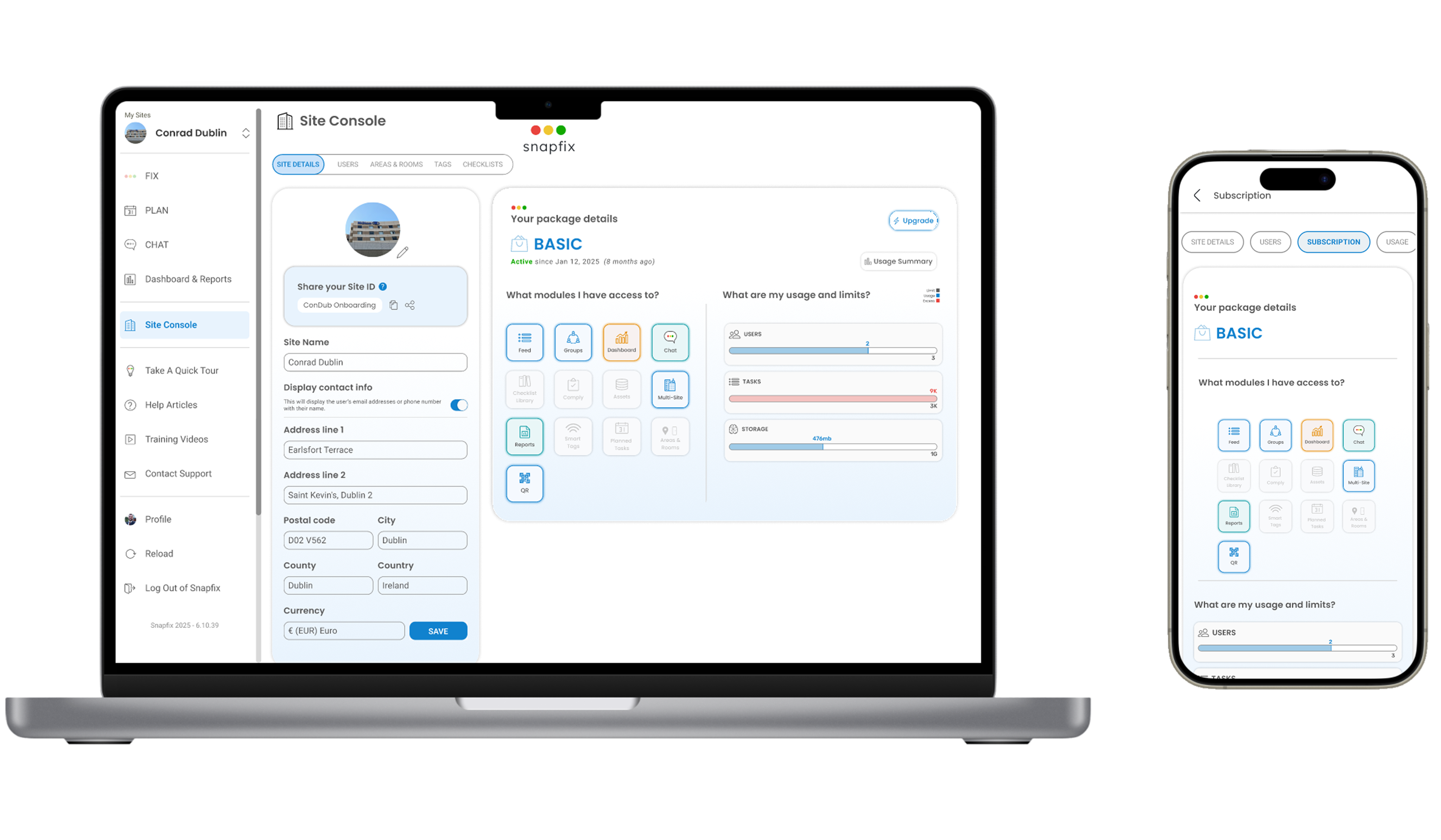
Plan visibilityUsers can see their current plan and included features.
Usage awarenessVisual indicators show when limits are approaching or exceeded.
Upgrade opportunitiesContextual prompts highlight the value of higher-tier plans.
Instead of stopping users, the system informs and guides them.
Paywall experience across the product
Rather than a single blocking screen, monetisation is distributed across the product, appearing where users naturally encounter limits and opportunities to upgrade.
Upgrade prompts within task flows
Plan visibility within settings
Upgrade prompts
Usage indicators across features
9 | Reflection
Designing the paywall shifted the focus from enforcing restrictions to communicating value.
It reinforced that monetisation is not a single moment in the product, but a system that needs to align with how users work.
Separating admin and end-user experiences was necessary. Balancing workflow continuity and supporting business goals was critical.
This approach establishes a foundation for introducing monetisation without compromising how the product is used.
About me
Get in Touch


ANDRE
GOUVEA
Designing a Soft Paywall Strategy
UX DESIGN
PRODUCT STRATEGY
MONETISATION
Users had no visibility over what their plan included, what they were approaching, or why upgrading was worth it.
- Product: Snapfix ( mobile + web)
- Problem: Users couldn’t see plan limits or understand the value of upgrading
- My Role: UX Strategy & Product Design
- Outcome: Introduced a soft paywall that communicates limits and plan value without interrupting workflows, enabling users to upgrade with context rather than friction
1 |Intro
Snapfix was moving to a subscription model.
That created an immediate tension. Users were already running daily operations inside the product - tasks assigned, teams coordinated, workflows in motion. Introducing limits into that environment meant interrupting work that teams depended on.
A traditional paywall would have solved the business problem and created a UX one.
The challenge wasn't adding a paywall. It was introducing monetisation in a way that didn't break the product people were already relying on.
2 |Opportunity
Plans were being defined: Basic, Team, Pro, Enterprise.
But the product had no way to show:
- what each plan included
- what was restricted
- when limits would be reached
Without that, users would only discover limits when something stopped working.
That creates friction:
- actions blocked without warning
- confusion around what is available
- no clear reason to upgrade
This wasn’t just a pricing problem.It could affect how the product would be used day to day.
3 |Outcome
A soft paywall strategy was designed to be introduced across the product.
Instead of blocking users, the system:
- surfaces plan limits in context
- highlights upgrade opportunities at relevant moments
- allows users to continue working while understanding restrictions
Monetisation becomes part of the workflow, not an interruption.
How did I get here?
4 | My Role
Led the design of the paywall across web and mobile.
Defined how limits appear, how upgrades are introduced, and how monetisation fits within existing workflows.
Worked with product and engineering to align the solution with how Snapfix already operates.
5 | Research
I looked at how other products introduce monetisation and how users experience limits.
What I saw:
- Hard paywalls interrupt workflows and create frustration
- Users respond better when value is shown before restriction
- Soft limits help users anticipate constraints
- Clear plan comparison improves upgrade decisions
These insights shaped the direction toward a non-disruptive approach.
6 | Key Challenge
Balancing business goals with usability.
The product needed to:
- encourage upgrades
- introduce plan limits
- avoid interrupting work
A traditional blocking paywall would solve monetisation, but damage the user experience.
7 | Design Decisions
Monetisation was designed around roles and responsibilities within the product.
Upgrade decisions are only relevant to admins, while end-users need to continue their work without interruption. Introducing restrictions at the wrong level would impact daily operations without enabling action.
To address this:
- admins are given visibility into plans, limits, and upgrade options
- end-users can continue using features, even when limits are exceeded
This separation maintains workflow continuity while ensuring the right users are exposed to upgrade decisions.
In parallel, usage visibility enables a more proactive upgrade approach.Rather than forcing users to upgrade at the point of restriction, exceeded limits can be surfaced and followed up through product and customer success.
This allows the product to:
- support discovery of plan value
- maintain uninterrupted usage
- create a clearer and more natural path to upgrade
Design Principles
The solution was guided by five principles:
Non-disruptiveNo blocking. Work continues for all users
Role-based visibilityDifferent information for end-users and admins
Early awarenessLimits are visible before they become a problem
Progressive monetisationUsers discover value before being pushed to upgrade
Product-led with supportUpgrade happens through context, with support from sales when needed
8 | Solution
The paywall was designed to be embedded directly into the product experience.
It includes:
Plan visibilityUsers can see their current plan and included features.
Usage awarenessVisual indicators show when limits are approaching or exceeded.
Upgrade opportunitiesContextual prompts highlight the value of higher-tier plans.
Instead of stopping users, the system informs and guides them.
Paywall experience across the product
Rather than a single blocking screen, monetisation is distributed across the product, appearing where users naturally encounter limits and opportunities to upgrade.
Upgrade prompts within task flows
Plan visibility within settings
Upgrade prompts
Usage indicators across features
9 | Reflection
Designing the paywall shifted the focus from enforcing restrictions to communicating value.
It reinforced that monetisation is not a single moment in the product, but a system that needs to align with how users work.
Separating admin and end-user experiences was necessary. Balancing workflow continuity and supporting business goals was critical.
This approach establishes a foundation for introducing monetisation without compromising how the product is used.
About me
Get in Touch

ANDRE
GOUVEA
Designing a Soft Paywall Strategy
UX DESIGN
PRODUCT STRATEGY
MONETISATION
Users had no visibility over what their plan included, what they were approaching, or why upgrading was worth it.
- Product: Snapfix ( mobile + web)
- Problem: Users couldn’t see plan limits or understand the value of upgrading
- My Role: UX Strategy & Product Design
- Outcome: Introduced a soft paywall that communicates limits and plan value without interrupting workflows, enabling users to upgrade with context rather than friction
1 |Intro
Snapfix was moving to a subscription model.
That created an immediate tension. Users were already running daily operations inside the product - tasks assigned, teams coordinated, workflows in motion. Introducing limits into that environment meant interrupting work that teams depended on.
A traditional paywall would have solved the business problem and created a UX one.
The challenge wasn't adding a paywall. It was introducing monetisation in a way that didn't break the product people were already relying on.
2 |Opportunity
Plans were being defined: Basic, Team, Pro, Enterprise.
But the product had no way to show:
- what each plan included
- what was restricted
- when limits would be reached
Without that, users would only discover limits when something stopped working.
That creates friction:
- actions blocked without warning
- confusion around what is available
- no clear reason to upgrade
This wasn’t just a pricing problem.It could affect how the product would be used day to day.
3 |Outcome
A soft paywall strategy was designed to be introduced across the product.
Instead of blocking users, the system:
- surfaces plan limits in context
- highlights upgrade opportunities at relevant moments
- allows users to continue working while understanding restrictions
Monetisation becomes part of the workflow, not an interruption.
How did I get here?
4 | My Role
Led the design of the paywall across web and mobile.
Defined how limits appear, how upgrades are introduced, and how monetisation fits within existing workflows.
Worked with product and engineering to align the solution with how Snapfix already operates.
5 | Research
I looked at how other products introduce monetisation and how users experience limits.
What I saw:
- Hard paywalls interrupt workflows and create frustration
- Users respond better when value is shown before restriction
- Soft limits help users anticipate constraints
- Clear plan comparison improves upgrade decisions
These insights shaped the direction toward a non-disruptive approach.
6 | Key Challenge
Balancing business goals with usability.
The product needed to:
- encourage upgrades
- introduce plan limits
- avoid interrupting work
A traditional blocking paywall would solve monetisation, but damage the user experience.
7 | Design Decisions
Monetisation was designed around roles and responsibilities within the product.
Upgrade decisions are only relevant to admins, while end-users need to continue their work without interruption. Introducing restrictions at the wrong level would impact daily operations without enabling action.
To address this:
- admins are given visibility into plans, limits, and upgrade options
- end-users can continue using features, even when limits are exceeded
This separation maintains workflow continuity while ensuring the right users are exposed to upgrade decisions.
In parallel, usage visibility enables a more proactive upgrade approach.Rather than forcing users to upgrade at the point of restriction, exceeded limits can be surfaced and followed up through product and customer success.
This allows the product to:
- support discovery of plan value
- maintain uninterrupted usage
- create a clearer and more natural path to upgrade
Design Principles
The solution was guided by five principles:
Non-disruptiveNo blocking. Work continues for all users
Role-based visibilityDifferent information for end-users and admins
Early awarenessLimits are visible before they become a problem
Progressive monetisationUsers discover value before being pushed to upgrade
Product-led with supportUpgrade happens through context, with support from sales when needed
8 | Solution
The paywall was designed to be embedded directly into the product experience.
It includes:
Plan visibilityUsers can see their current plan and included features.
Usage awarenessVisual indicators show when limits are approaching or exceeded.
Upgrade opportunitiesContextual prompts highlight the value of higher-tier plans.
Instead of stopping users, the system informs and guides them.
Paywall experience across the product
Rather than a single blocking screen, monetisation is distributed across the product, appearing where users naturally encounter limits and opportunities to upgrade.
Upgrade prompts within task flows
Plan visibility within settings
Upgrade prompts
Usage indicators across features
9 | Reflection
Designing the paywall shifted the focus from enforcing restrictions to communicating value.
It reinforced that monetisation is not a single moment in the product, but a system that needs to align with how users work.
Separating admin and end-user experiences was necessary. Balancing workflow continuity and supporting business goals was critical.
This approach establishes a foundation for introducing monetisation without compromising how the product is used.
About me
Get in Touch